Figs from the Garden – A Taste of Late Summer in France
This post contains affiliate links. As an Amazon Associate I earn from qualifying purchases, at no additional cost to you.
Figs from my neighbor’s garden are one of those little gifts that make late summer in France feel special.
Not food from a shop.
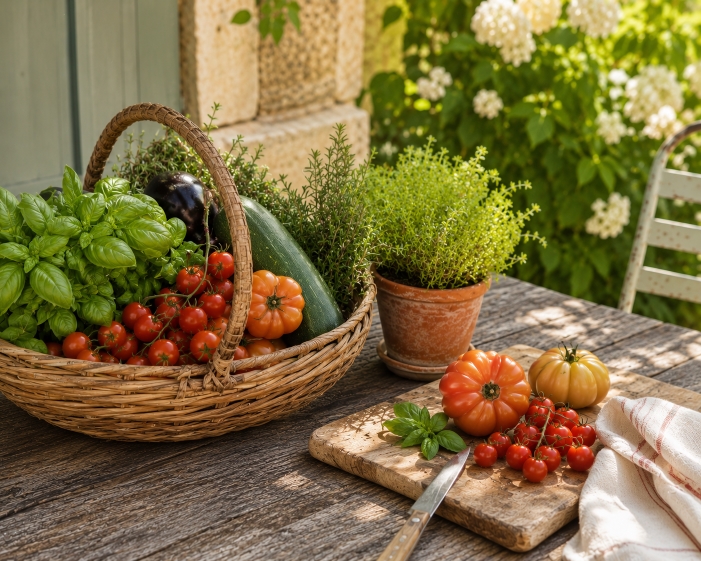
A handful of tomatoes. A courgette that grew much bigger than expected. Herbs. A basket of fruit.
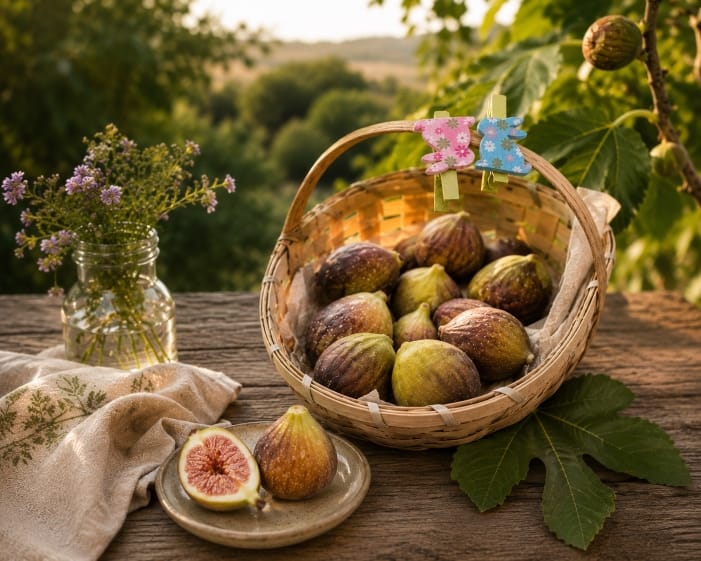
And this time: figs from my neighbor’s garden.
Beautiful, ripe figs, picked nearby and shared simply because there were enough to share.
To me, this is one of the loveliest parts of summer in France.
Figs from my neighbor’s garden: A late-summer treat
Anyone who grows fruit or vegetables knows that there comes a moment when the garden suddenly decides everything must be ready at once.
For weeks, you wait.
Then one morning there are more tomatoes than you can eat, courgettes everywhere, herbs growing faster than you can cut them — or a fig tree covered in ripe fruit.
That’s when the harvest begins travelling between houses.
You give away what you have too much of.
Someone else gives you what they have too much of.
There is no complicated arrangement. Often it is just:
“Would you like some?”
Of course I would.
Especially figs.
The Taste of Late Summer
Fresh figs feel like late summer to me.
They are soft and delicate, intensely sweet when perfectly ripe, and almost too beautiful to cut open.
The outside can look quite ordinary.
Then you slice one in half and discover that gorgeous pink-red centre filled with tiny seeds.
When figs are this fresh, I don’t think they need much.
In fact, the less you do to them, the better.
My Favourite Way to Eat Fresh Figs
The first ones rarely make it into a recipe.
I simply wash them gently, cut them open and eat them as they are.
But when I have enough, I love turning them into a very simple plate.
Fresh Figs with Goat Cheese, Honey & Walnuts
For 2–4 people:
- 6–8 ripe fresh figs
- Soft goat cheese
- A small handful of walnuts
- A little honey
- Fresh thyme, optional
- Freshly ground black pepper
- A few salad leaves, optional
Cut the figs in halves or quarters.
Arrange them on a simple ceramic serving platter with pieces of soft goat cheese.
Scatter over the walnuts.
Drizzle just a little honey on top.
Add a few thyme leaves and a turn of black pepper.
And stop there.
It doesn’t need anything else.
The sweetness of the figs, the slightly tangy goat cheese and the crunch of the walnuts work beautifully together.
An Easy Summer Apéro
You can also turn the same ingredients into little bites for apéro.
Cut the figs in half, add a small spoonful of goat cheese to each one and finish with a tiny drizzle of honey.
If you want, add a walnut on top.
They’re lovely served outside with drinks before dinner. They’re lovely served outside with drinks before dinner. I like arranging everything on a simple wooden serving board with cheese, nuts and whatever else we have on hand.
And because almost everything can be prepared in a few minutes, it is exactly the kind of summer cooking I like.
Simple ingredients, very little work and plenty of time left to actually sit down and enjoy the evening.
Figs for Breakfast
If there are still figs left the following morning, they usually end up in breakfast.
A bowl of thick yoghurt or fromage blanc, sliced fresh figs, a little honey and some nuts is enough.
You can also put them on toast with ricotta or fresh goat cheese.
Again, the important ingredient isn’t really the recipe.
It’s having figs that were hanging on a tree not long before you ate them.
When You Have Too Many Figs
Of course, sometimes there are far more figs than anyone can eat fresh.
That’s when I start thinking about preserving them.
A simple fig compote is probably the easiest option.
Cut the figs into pieces, put them in a saucepan with a small amount of sugar and a squeeze of lemon, then cook gently until they become soft and jammy.
I deliberately keep the sugar fairly low when I’m making something that will be eaten quickly.
The compote is wonderful with yoghurt, pancakes, toast or cheese.
If I have enough figs to preserve, I like keeping a few glass preserving jars ready in the kitchen.
For longer storage, I would make a properly tested fig jam recipe suitable for preserving rather than simply reducing the sugar in a traditional recipe.
Figs can also be roasted.
Cut them in half, add a tiny drizzle of honey and roast until soft and caramelised. Serve them warm with yoghurt, vanilla ice cream or cheese.
More Than Just Figs
But perhaps my favourite thing about this little harvest is that the figs didn’t come from my garden at all.
They came from my neighbor’s.
And somehow that makes them even more representative of the life I love here.
Living close to the seasons isn’t only about growing everything yourself.
It is also about noticing what is growing around you.
Sharing.
Receiving.
Using what is abundant rather than always deciding in advance what you want to cook and then going to buy it.
Sometimes dinner begins because the tomatoes are finally ripe.
Sometimes dessert happens because someone brings you peaches.
And sometimes you find yourself standing in the kitchen with a bowl full of figs because your neighbor’s tree has had a particularly generous year.
A Little Taste of Life in France
These are the moments I want to remember.
Not necessarily the big occasions.
Just a warm late-summer day, a bowl of figs on the kitchen table and the simple pleasure of knowing they grew only a short distance away.
Some will be eaten immediately.
Some might become breakfast.
A few will probably end up with goat cheese and honey for apéro.
And before long, fig season will be over again.
That’s perhaps why seasonal food feels so special.
You enjoy it while it is here.
And then you wait until next year.
🌿 Curious what else to plant right now? I made a little seasonal almanac for exactly that — take a look here.