Beyond Hanoi and Hoi An: Hidden Gems in Vietnam Worth Slowing Down For
When people imagine travelling through Vietnam, a few places usually come to mind first.
Hanoi. Ha Long Bay. Hoi An. Ho Chi Minh City.
They are famous for good reason, and I would never tell someone not to visit them.
But Vietnam is much bigger than its most photographed destinations.
Some of the places I find most interesting are the ones where you can still wake up early and watch ordinary life begin around you. Where breakfast comes from a tiny family-run shop. Where the road winds between rice fields, mountains or fishing villages. Where there isn’t necessarily a long list of “things to do.”
You simply go there.
And experience it.
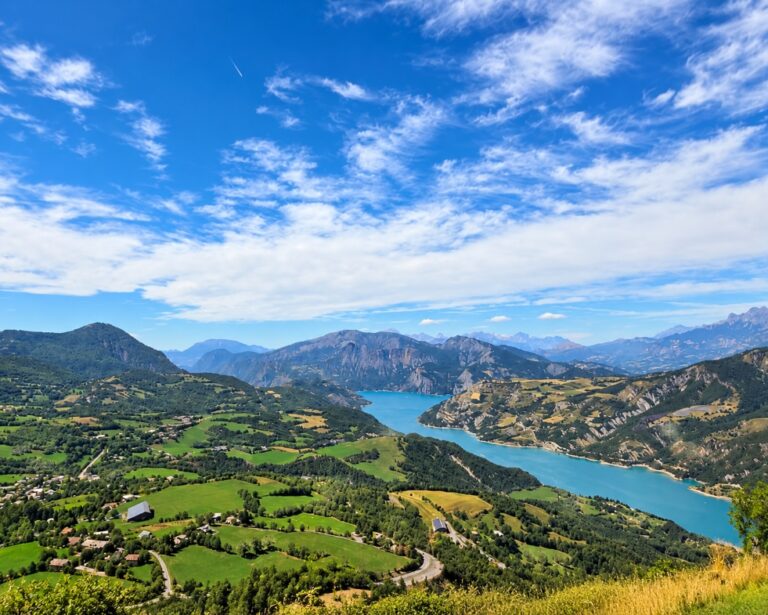
It is this slower way of discovering a place that I love most when I travel, whether I am in Vietnam or exploring hidden corners of Provence.
If you want to discover a quieter side of Vietnam, here are some beautiful places worth putting on your map.
1. Pù Luông – Rice Terraces Without the Sapa Crowds
There is something almost hypnotic about looking across Vietnamese rice terraces.
One green layer falls into another, following the shape of the mountains until eventually everything disappears into mist.
Pù Luông Nature Reserve, in Thanh Hóa Province, offers exactly this kind of landscape.
The area is home to valleys, traditional villages, forests and spectacular terraced rice fields. Walking between the villages gives you a completely different feeling from rushing between tourist attractions.
This is somewhere to stay for a few days.
Wake up slowly.
Drink Vietnamese coffee while looking across the valley.
Walk through the rice fields.
Listen to the insects in the evening.
And accept that perhaps nothing particularly dramatic needs to happen.
That is the point.
Best for: rice terraces, hiking, village life and slow travel.
2. Hà Giang – For Roads You Never Forget
Hà Giang is not completely unknown anymore, especially among adventurous travellers.
But compared with Vietnam’s major destinations, the far north still feels like another world.
Here, enormous limestone mountains rise beside winding roads, deep valleys disappear below mountain passes and tiny villages appear in places where you wonder how anyone ever managed to build them.
The famous Hà Giang Loop attracts motorbike travellers, but I think the real beauty of the region lies beyond simply completing a route.
Stop.
Look around.
Visit a market.
Have lunch in a small town.
Watch clouds move across the mountains.
The landscapes are extraordinary, but everyday life between those landscapes is just as interesting.
Best for: dramatic scenery, road trips, mountain villages and photography.
3. Cao Bằng – Waterfalls, Mountains and Quiet Roads
If Hà Giang feels dramatic, Cao Bằng feels peaceful.
Located in northeastern Vietnam near the Chinese border, the province is filled with limestone mountains, rivers, valleys and rural villages.
Its most famous sight is Bản Giốc Waterfall, one of Vietnam’s most impressive waterfalls.
But don’t arrive, photograph the waterfall and immediately leave.
The surrounding countryside deserves time too.
Roads wind between limestone peaks and rice fields. Small villages sit beside rivers. Buffalo wander through fields.
It is the kind of landscape where the journey becomes as beautiful as the destination.
And those are often my favourite journeys.
Best for: waterfalls, countryside, scenic drives and quieter northern Vietnam.
4. Phong Nha – More Than Its Famous Caves
Phong Nha-Kẻ Bàng is a UNESCO World Heritage Site. It has become internationally known because of the enormous caves hidden beneath its limestone mountains.
And yes, the caves are extraordinary.
But I think there is another side of Phong Nha that deserves just as much attention.
The countryside.
Rent a bicycle and ride beyond the town.
You will find rice fields, grazing buffalo, limestone mountains and small roads connecting rural villages.
Stop somewhere for a Vietnamese iced coffee.
Continue cycling.
Get slightly lost.
Find your way again.
Sometimes travel doesn’t need to be more complicated than that.
For travellers who love nature but also appreciate having time to simply wander, Phong Nha is an excellent place to stay longer than expected.
Best for: caves, cycling, countryside and outdoor adventures.
5. Quy Nhơn – A Different Kind of Vietnamese Beach Escape
Vietnam has plenty of famous beach destinations.
But Quy Nhơn, on the south-central coast, has traditionally had a quieter rhythm than places such as Nha Trang or Đà Nẵng.
There are beaches, rocky coastlines, fishing villages and plenty of seafood.
And seafood is a very good reason to stay somewhere longer.
Early in the morning, fishing boats return to shore.
Later, little restaurants and street stalls begin preparing food.
By evening, people gather outside to eat seafood, drink something cold and enjoy the cooler air.
That everyday atmosphere is what I love about coastal Vietnam.
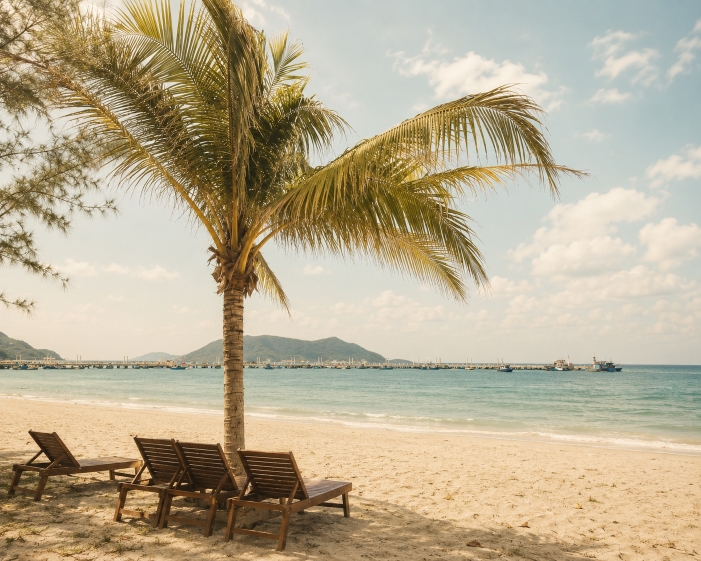
You don’t necessarily need a luxury resort.
Give me a plastic stool, something delicious from the sea and a view of the water, and I am quite happy.
Best for: beaches, seafood, coastal drives and relaxed days by the sea.
6. Phú Yên – Vietnam’s Wild Coastal Beauty
Just south of Quy Nhơn lies Phú Yên Province.
This is a wonderful region for travellers who like coastal scenery without needing every beach to be surrounded by hotels and beach clubs.
There are long stretches of coastline, rocky cliffs, green countryside, fishing communities and small bays.
One of the best ways to experience this part of Vietnam is simply to travel along the coast and stop whenever something catches your attention.
A quiet beach.
A fishing boat.
A roadside café.
A small seafood restaurant.
A view you hadn’t expected.
Those unplanned stops often become the memories you keep.
Best for: road trips, wild coastline, photography and seafood.
7. Măng Đen – Vietnam’s Cool Mountain Escape
Vietnam is often associated with tropical heat.
But head into the Central Highlands and you discover a completely different landscape.
Măng Đen, in Kon Tum Province, sits at a much higher altitude and has a cooler climate, forests, lakes, waterfalls and farms.
Mornings can feel wonderfully fresh.
There is something very comforting about putting on a light jacket, finding a warm cup of Vietnamese coffee and watching mist move between pine-covered hills.
It is a completely different Vietnam from the beaches and tropical cities farther south.
And perhaps that contrast is exactly what makes it interesting.
Best for: cool weather, forests, waterfalls, coffee and quiet weekends.
8. Châu Đốc – Life Along the Mekong
The Mekong Delta is often experienced through organised day trips.
But staying longer in Châu Đốc, close to the Cambodian border, allows you to see a more complex side of southern Vietnam.
This is a place shaped by rivers, markets, religion and different cultural influences.
Visit the market early.
Take a boat.
Explore the surrounding countryside.
Eat.
Then eat again.
This is Vietnam, after all.
Food is rarely just something you squeeze between sightseeing stops.
It is part of understanding where you are.
And the Mekong Delta is particularly good at reminding you of that.
Best for: river life, markets, food and Mekong Delta culture.
9. Côn Đảo – Beautiful, Remote and Thought-Provoking
Côn Đảo is different from the other places on this list.
The islands are extraordinarily beautiful, with clear water, beaches, forested hills and marine life.
But Côn Đảo also carries an important and painful history.
For decades, the islands were used as a prison site, first during French colonial rule and later during the conflicts that shaped modern Vietnam.
That history remains an essential part of visiting.
It makes Côn Đảo a place where beautiful landscapes and difficult memories exist beside one another.
Take time for both.
Visit the historical sites.
Learn what happened here.
Then experience the islands’ quieter natural side.
Travel isn’t always about finding somewhere pretty.
Sometimes it is also about understanding a place more deeply.
Best for: history, nature, beaches and travellers looking for somewhere more remote.
How to Find Your Own Hidden Gems in Vietnam
There is one problem with articles about hidden gems.
Once enough people write about a hidden place, it isn’t particularly hidden anymore.
So perhaps the better question is not:
Where are Vietnam’s hidden gems?
But:
How do you find your own?
My answer is surprisingly simple.
Leave space in your itinerary.
For me, this is really what slow travel is about: leaving enough room for the unexpected.
Take the smaller road occasionally.
Stay somewhere for two nights instead of one.
Ask where people nearby go for breakfast.
Walk around early in the morning.
Sit in cafés.
Visit local markets. Local markets are one of my favourite ways to understand a place — something I also love about wandering through markets in Provence.
And don’t assume that somewhere needs a famous attraction to be worth visiting.
Vietnamese life happens everywhere.
Sometimes the woman selling bánh mì outside your guesthouse becomes a stronger memory than the monument you travelled three hours to see.
A Different Way to Travel Through Vietnam
Vietnam can be intense.
Motorbikes.
Markets.
Street food.
Heat.
Noise.
People.
Coffee strong enough to reconsider all your life decisions.
But move beyond the biggest cities and famous attractions and another rhythm begins to appear.
Rice fields in the early morning.
Fishing boats returning to shore.
Mountain roads disappearing into clouds.
Someone washing vegetables outside a house.
A bowl of noodles eaten on a tiny plastic stool.
Coffee slowly dripping through a metal phin.
None of these things necessarily belong on a bucket list.
And perhaps they shouldn’t.
Because the Vietnam I love isn’t only found at famous landmarks.
It is also found between them.
In the ordinary places.
On the smaller roads.
At the market early in the morning.
At a café where you planned to stay for ten minutes and somehow stayed for an hour.
It is the same feeling I love when wandering through small French villages — when the place itself becomes more important than the itinerary.
Sometimes the best hidden gem isn’t a destination at all.
It is simply having enough time to notice where you are.