How to Save Flower Seeds for Next Year – A Simple Autumn Garden Ritual
There is a moment in the garden when everything begins to change.
The flowers that filled the garden with colour all summer start to fade. Petals fall, stems turn brown and the garden slowly begins to look a little less generous.
But I’ve learned not to be too quick to tidy everything away.
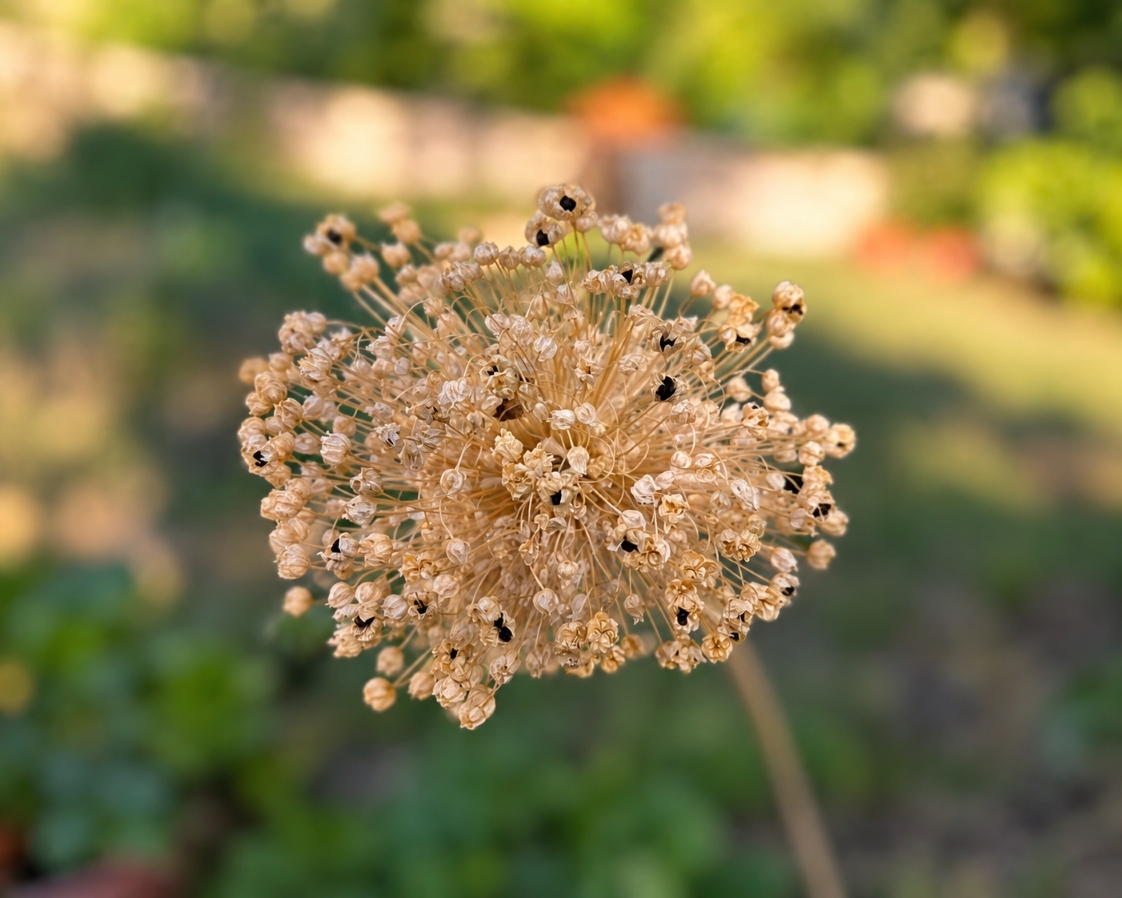
Because hidden inside some of those dried flower heads are hundreds of tiny seeds — next year’s garden waiting quietly to begin.
Saving seeds has become one of those small autumn garden rituals that I really enjoy. It costs almost nothing, takes only a little time and somehow makes the end of the gardening season feel less like an ending.
Instead of throwing the dried flowers onto the compost pile, I collect a few, open the seed heads and save what I find inside.
And just like that, part of this year’s garden gets to come back again.
Why I Save Seeds From My Garden
I originally started collecting flower seeds for a very practical reason: why buy the same seeds again when the garden is already producing them?
But over time, I started enjoying the process itself.
Throughout spring and summer, we spend so much time encouraging plants to grow. We water them, watch the first leaves appear, wait for flowers and enjoy them while they last.
Then autumn arrives.
Allowing some flowers to finish their natural cycle and produce seeds feels like completing the story.
There is also something lovely about growing a plant the following spring and knowing exactly where its seeds came from.
Maybe it was a flower beside the vegetable garden.
Maybe it grew particularly well during a hot summer.
Or perhaps it was simply one that made me happy every time I walked past it.
Saving a few seeds means I can try to grow it again.
When Should You Collect Flower Seeds?
Timing is probably the most important part of learning how to collect seeds from flowers.
Seeds generally need time to mature on the plant.
Instead of cutting off a flower as soon as it fades, I leave some flower heads in place and allow them to dry naturally.
Depending on the plant, the flower head or seed pod will gradually become brown, dry and sometimes brittle.
That is usually my sign to take a closer look.
I prefer collecting seeds on a dry day after any morning moisture has disappeared. Dry seed heads are much easier to work with, and keeping moisture away from stored seeds is important.
If the seeds still look soft or the seed head is very green, I normally leave it in the garden a little longer.
The plant usually tells you when it is ready.
How to Save Flower Seeds Step by Step
Saving seeds for next year doesn’t require much equipment.
I usually keep it very simple.
First, I choose healthy flowers that I would happily grow again. I leave several of their flower heads on the plant until they are completely mature and dry.
Then I cut or gently remove the dried heads.
Some seeds fall out immediately when you turn the flower head upside down. Others need a little encouragement with your fingers.
This is one of my favourite parts.
You open something that looks like an old, finished flower and suddenly discover dozens of tiny seeds hidden inside.
I remove as much dried plant material as I reasonably can and spread the seeds somewhere dry for a little longer before storing them.
They don’t need to look perfectly cleaned.
This is a home garden, not a seed company.
Make Sure Your Seeds Are Dry
This is the part I try not to rush.
Seeds should be thoroughly dry before they are put away for several months.
Moisture can encourage mould and spoil the seeds before you ever have a chance to plant them.
After collecting them, I usually leave them somewhere dry and protected for a while rather than immediately closing them inside an airtight container.
Once I’m confident they’re dry, they’re ready to be stored.
Don’t Forget to Label Them
This sounds obvious.
It also sounds like something I definitely thought I would remember.
Then a few months pass and suddenly you’re looking at several envelopes containing tiny brown and black seeds and wondering what on earth any of them are.
So now I label them.
At minimum, I write:
- the name of the flower
- the year the seeds were collected
If I’m saving several varieties of the same plant, I’ll add the variety or colour too.
It takes a few seconds in autumn and saves a surprising amount of confusion in spring.
How I Store Flower Seeds Until Spring
Once everything is completely dry, I put the seeds into small paper envelopes or labelled packets.
Then I keep them somewhere cool, dry and away from direct sunlight.
The goal is simply to protect them from moisture, heat and big temperature changes until it is time to sow again.
Different plants have different storage lives and germination requirements, so I always check the particular variety if I’m unsure.
But for many of the flowers I grow from year to year, this simple method works perfectly well.
Will Saved Seeds Grow Exactly Like the Parent Plant?
Not necessarily — and I actually think that’s part of the fun.
Seeds from open-pollinated plants can often produce plants similar to their parents. But hybrids may produce flowers that look quite different.
Plants can also cross-pollinate with related varieties growing nearby.
So the flower that appears next year might not be exactly what you expected.
For someone trying to preserve a very specific variety, that’s important to understand.
In my garden, I’m usually much less strict about it.
Sometimes I just plant the seeds and see what happens.
A little surprise in the garden isn’t necessarily a bad thing.
Leave Some Seeds for the Garden
I don’t collect everything.
Some seed heads stay exactly where they are.
They can provide food for birds and other wildlife, and certain plants may naturally sow themselves around the garden.
It also means I don’t feel the need to make the garden perfectly tidy as soon as summer ends.
A garden in autumn looks different from a garden in June.
And that’s okay.
There is beauty in this stage too.
A Small Autumn Garden Task That Feels Like Hope
There are plenty of bigger autumn garden tasks waiting at this time of year.
There are plants to cut back, leaves to deal with, beds to prepare and vegetables to harvest.
But collecting seeds is one of the quiet jobs I look forward to.
A dried flower head doesn’t look particularly special.
Neither does an envelope filled with tiny seeds.
But when I put those little envelopes away, I’m already imagining spring.
A pot of soil.
A few tiny seeds.
The first green shoots appearing.
And eventually, if everything goes well, flowers growing in the garden again.
Maybe that is what I like most about saving seeds.
The garden teaches you to think ahead.
Summer ends, autumn arrives, winter will follow — but somewhere in a small envelope are the beginnings of next year’s garden.
And for now, that’s enough.
— Chez Thao Hoang