
The Older I Get, the Less I Need to Explain Myself
The older I get, the more I realise that learning to stop explaining yourself is one of those small things that can make life surprisingly peaceful. Not everyone needs to understand our choices, and perhaps that’s perfectly fine.
There was a time when I felt the need to explain almost everything.
Why I made a certain decision. Why I didn’t want to go somewhere. Why I preferred doing things my own way. Why I said no when everyone else seemed to be saying yes.
And if someone misunderstood me?
Oh, that was even worse.
I would spend far too much time trying to make sure they understood what I actually meant.
Sometimes I would replay conversations in my head, thinking about what I should have said differently.
Not because I particularly enjoyed explaining myself.
Quite the opposite.
I just didn’t like the idea of someone having the wrong impression of me.
But somewhere along the way, something changed.
I don’t know exactly when it happened. There wasn’t a dramatic moment when I suddenly became a wiser, more confident woman who stopped caring about other people’s opinions.
That would make a lovely story, wouldn’t it?
Unfortunately, real life is rarely that cinematic.
I think I simply got older.
A little more tired, perhaps. A little more comfortable with myself.
And definitely less interested in unnecessary conversations.
Why I’m Learning to Stop Explaining Myself
One thing I’ve slowly realised is that people don’t always need to understand why I do things the way I do.
And more importantly, I don’t always need them to.
Some people enjoy being surrounded by friends, having busy weekends, attending gatherings, and filling their calendars with activities.
I enjoy spending time with people too.
But I also genuinely enjoy being at home.
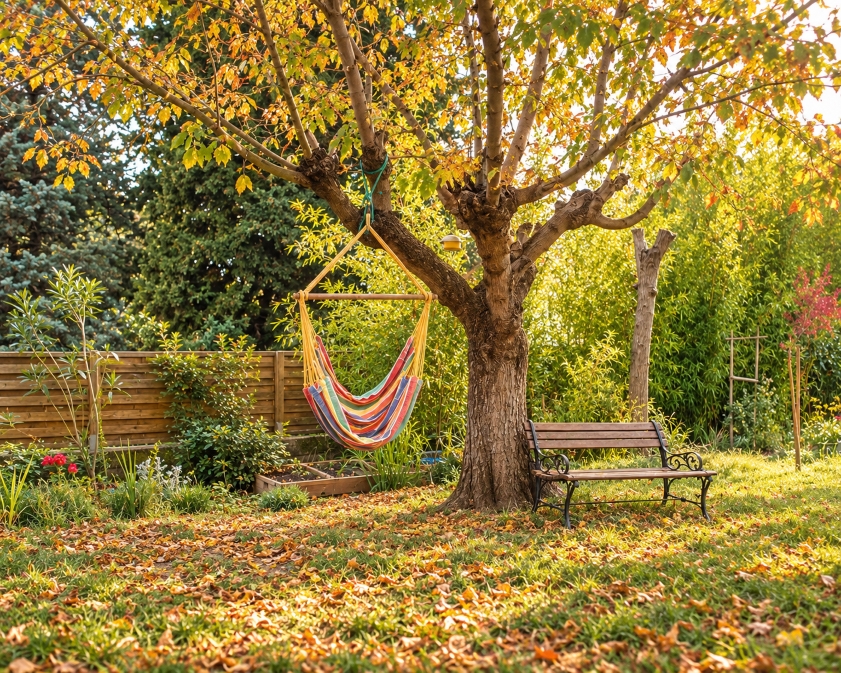
A quiet afternoon in the garden. A cup of coffee under the treehouse. Cooking something with whatever happens to be available in the kitchen.
Or simply doing absolutely nothing for a little while.
And by doing nothing, I mean doing nothing useful.
Not secretly cleaning the kitchen while pretending to relax.
Although, to be fair, that happens quite often too.
When I was younger, I might have felt the need to explain why I preferred staying home instead of going out.
Now?
Sometimes I just want to stay home.
That’s it.
No complicated reason. No hidden meaning. No personal crisis.
Just me, my coffee, and perhaps a garden that needs more attention than I originally planned to give it.
Learning to stop explaining yourself doesn’t mean becoming unfriendly. Sometimes it simply means accepting that your preferences don’t need everyone’s approval.
Getting Older and Wiser Doesn’t Mean Having All the Answers
People often associate getting older and wiser with becoming more confident, patient, and understanding.
Perhaps that’s true.
But I think getting older also means recognising when a conversation isn’t worth the effort.
I used to believe that if I explained something clearly enough, people would eventually understand my point of view.
Which sounds perfectly reasonable.
Except that it doesn’t always work.
You can explain your intentions, your reasons, and your decisions as carefully as possible, and someone will still interpret them differently.
Sometimes because they have different experiences.
Sometimes because they see the world differently.
And sometimes, quite simply, because they’ve already decided what they want to believe.
I’ve learned that there is a difference between having a conversation and trying to convince someone who isn’t interested in understanding.
The first can be interesting.
The second is exhausting.
These days, I’m much more willing to accept that we simply see things differently.
I don’t need to win every discussion.
I don’t need the last word.
And I certainly don’t need to spend the rest of my evening thinking of the perfect argument I should have made three hours earlier.
Although my brain occasionally still likes to offer suggestions.
Usually when I’m trying to fall asleep.
Very helpful. Thank you, brain.
This post contains affiliate links. As an Amazon Associate I earn from qualifying purchases, at no additional cost to you.
Learning to Set Boundaries Without Feeling Guilty
Another thing I’ve noticed is that saying no becomes easier when you stop believing that every no requires a detailed explanation.
I used to feel uncomfortable refusing invitations or requests.
Not necessarily because I wanted to say yes, but because I worried that saying no might disappoint someone.
So I would explain.
And explain.
And sometimes explain a little more, just in case the first explanation wasn’t convincing enough.
These days, I’m trying to keep things simpler.
“Thank you, but I can’t.”
“Not this time.”
“I’d rather stay home.”
Perfectly acceptable sentences.
Of course, when it comes to people I love, I still explain things when an explanation is useful or considerate.
I’m not suggesting that we should suddenly become mysterious creatures who refuse to communicate.
Imagine my husband asking why I’ve moved something in the kitchen, and me responding:
“I don’t feel the need to explain myself anymore.”
I suspect that philosophy wouldn’t survive very long in our household.
Especially if he’s looking for something I’ve put away in a place that made perfect sense to me and absolutely no sense to him.
There’s a difference between learning to set boundaries and being unnecessarily difficult.
And I would like to believe I’m learning that difference.
Most of the time.
I suppose that’s the tricky part about setting healthy boundaries.
We want to respect other people’s feelings, but we also need to respect our own time and choices.
And sometimes, saying no without a long explanation is perfectly reasonable.
Stop Explaining Yourself to People Who Have Already Made Up Their Minds
This is probably one of the lessons that took me the longest to learn.
Not everyone will like us.
Not everyone will agree with our choices.
And not everyone will understand the way we live.
When we’re younger, being liked can feel surprisingly important.
We want people to think we’re kind, interesting, capable, thoughtful, and perhaps reasonably good company.
And there’s nothing wrong with wanting good relationships.
But the problem begins when we start adjusting ourselves too much just to maintain other people’s approval.
We say yes when we want to say no.
We agree when we don’t really agree.
We explain ourselves repeatedly because we’re afraid that someone might misunderstand our intentions.
And sometimes we end up worrying about the opinions of people who barely know us.
Looking back, that’s a rather strange way to spend our time.
I’ve gradually accepted that some people will like me, some won’t, and most are probably far too busy with their own lives to think about me as much as I imagine.
Which is actually quite reassuring.
I don’t have to be everyone’s favourite person.
I don’t have to fit into every group.
And I don’t have to pretend to enjoy something simply because everyone else seems to love it.
I can be friendly without being close to everyone.
I can be polite without agreeing with everything.
And I can respect someone else’s choices without feeling the need to make the same ones.
That feels like a much more comfortable way to live.
Finding Peace as You Get Older
I think one of the biggest changes that comes with age is how we value our time.
There is work.
There are children.
There is the house, the garden, the meals, the laundry, and a never-ending collection of little things that somehow need attention.
And somewhere in between all of that, we’re supposed to find time to enjoy life.
So naturally, I’ve become a little more selective about where I spend my energy.
Do I really want to spend twenty minutes explaining why I made a particular decision?
Or would I rather spend those twenty minutes sitting outside with a coffee?
Most days, the coffee wins.
And I don’t think that’s a bad thing.
It doesn’t mean I’ve become indifferent to other people.
It simply means I’ve started recognising that not every opinion requires my response.
Not every misunderstanding requires a correction.
And not every conversation deserves the same amount of energy.
Some things matter.
Others really don’t.
The trick, apparently, is learning to tell the difference.
I’m still working on that part.
Perhaps finding peace as you get older isn’t about having a perfectly calm life.
Maybe it’s about knowing which things deserve your attention and which ones you can simply leave alone.
Being Comfortable With Yourself Takes Time
I’ve also discovered that silence can be a perfectly good response.
Not the angry kind of silence.
Not the kind where you’re secretly hoping the other person will notice that you’re upset.
I mean the ordinary, peaceful kind.
The kind that comes from realising that you don’t have anything useful to add.
Someone makes a comment you disagree with.
You could start a discussion.
You could explain your point of view.
You could spend the next half hour debating something that neither of you is likely to change your mind about.
Or you could simply smile, take another sip of coffee, and move on.
Of course, there are moments when speaking up matters.
When someone is being treated unfairly, when a relationship needs an honest conversation, or when silence would create more problems than it solves.
I’m not interested in avoiding every difficult conversation.
But I’ve learned that peace doesn’t always come from resolving every disagreement.
Sometimes it comes from accepting that a disagreement can exist without becoming a problem.
Perhaps that’s something we understand better with age.
We gradually realise that happiness isn’t necessarily about having everyone agree with us.
It’s also about feeling comfortable with our own choices.
I find the research and reflections on happiness and well-being from the Greater Good Science Center quite interesting.
And that’s a surprisingly useful thing to know.
Especially during family gatherings.
I’m sure some of you know exactly what I mean.
How to Stop Explaining Yourself Without Becoming Rude
I wish I could say that I’ve completely mastered the art of not explaining myself.
I haven’t.
There are still moments when I feel misunderstood and immediately want to clarify everything.
There are still conversations I replay in my head.
And there are still times when I catch myself giving a long explanation for something that could have been answered with a simple sentence.
Old habits are stubborn.
But the difference is that I notice it now.
And sometimes, halfway through an unnecessary explanation, I stop and think:
Why am I making this so complicated?
Maybe the other person doesn’t need all these details.
Maybe they don’t particularly care.
Or maybe I’m the only one who thinks this situation requires a fifteen-minute presentation.
It’s a slightly embarrassing realisation.
But also a useful one.
Because getting older hasn’t necessarily made me wiser in every area of life.
I still make questionable decisions.
I still forget things.
I still occasionally open the refrigerator and stand there wondering what I came to get.
But I think I’ve become a little better at recognising what deserves my attention.
And what doesn’t.
For me, that’s what learning to stop explaining yourself looks like.
Not becoming cold or distant.
Just becoming a little more comfortable with the fact that we don’t have to justify every ordinary choice.
The Older I Get, the More I Appreciate a Simple Life
People often talk about ageing as something we should try to resist.
The years pass. Our routines change. We become more aware of time.
But I think there are some genuinely lovely things about getting older too.
One of them is becoming more comfortable with who we are.
Not because we suddenly have everything figured out.
We don’t.
At least, I certainly don’t.
But we begin to understand our preferences, our limits, and the kind of life we actually enjoy.
We become less interested in proving that our choices are the right ones.
And more interested in simply living with those choices.
For me, that means appreciating ordinary days.
Spending time with my family.
Cooking, gardening, travelling when we can, and enjoying the little routines that make a house feel like home.
It means making decisions that work for our family, even when other people might do things differently.
It means accepting that someone else’s idea of a wonderful life doesn’t necessarily have to be mine.
And perhaps most importantly, it means understanding that I don’t owe everyone a detailed explanation of how I choose to live.
I still care about people.
I still value good conversations.
And I still believe that listening, communicating, and trying to understand one another are important.
I just don’t feel the same need to explain every little thing anymore.
Maybe that’s confidence.
Maybe it’s maturity.
Or maybe I’ve simply reached an age where I’d rather spend my afternoon doing something enjoyable than defending a perfectly ordinary decision.
Whatever it is, I quite like it.
And for once, I don’t think I need to explain why.
What about you? Have you noticed that the older you get, the less you worry about explaining your choices to other people? Or are you still the person who prepares a complete explanation before saying no?
I’d love to hear your thoughts.
— Chez Thao Hoang 🌿