Gỏi Cuốn Recipe – Vietnamese Fresh Spring Rolls
Gỏi cuốn is one of those Vietnamese dishes I never get tired of making.
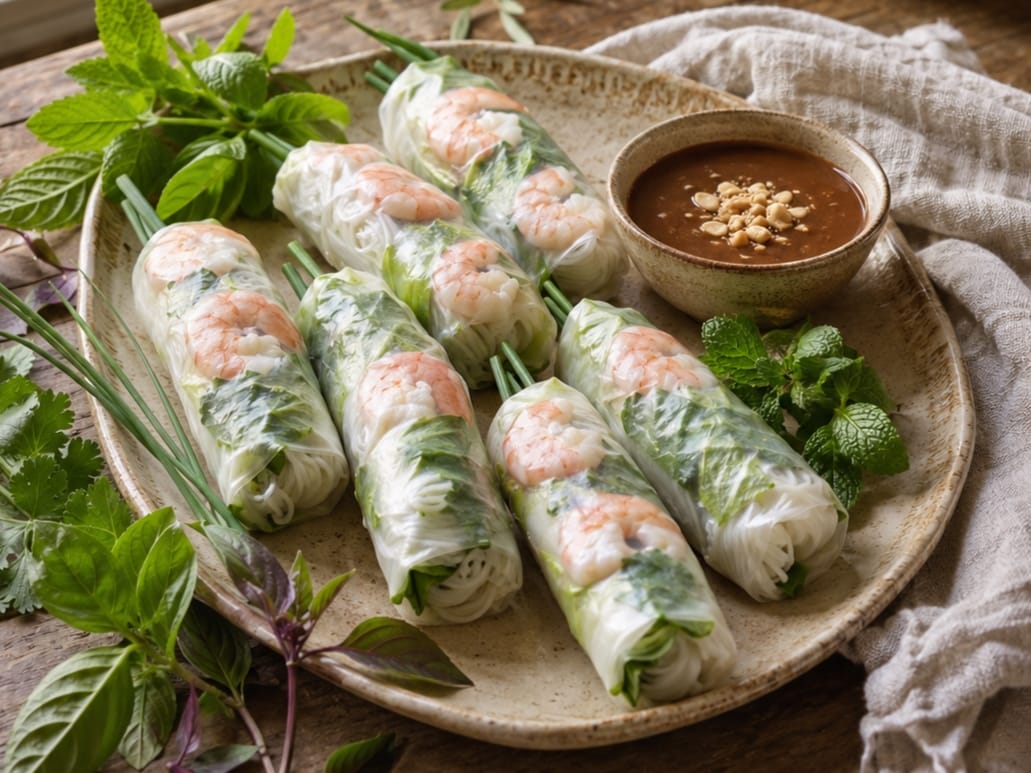
Fresh rice paper, soft rice vermicelli, crunchy vegetables, fragrant herbs, prawns and pork, all wrapped together and dipped into a delicious sauce.
In English, they are usually called Vietnamese fresh spring rolls or Vietnamese rice paper rolls.
Whatever you call them, they are one of my favourite ways to bring a little taste of Vietnam to our table in France.
And unlike fried spring rolls, gỏi cuốn are fresh rather than deep-fried, making them particularly lovely for a warm day.
What Is Gỏi Cuốn?
Gỏi cuốn are Vietnamese rice paper rolls filled with a combination of rice vermicelli, fresh herbs, lettuce, vegetables and protein.
A traditional combination often includes prawns and pork, although there are many variations.
What makes them special isn’t just one ingredient.
It’s the balance.
Soft noodles.
Tender pork.
Sweet prawns.
Crunchy vegetables.
Fresh herbs.
And that slightly chewy rice paper wrapper.
Every bite is a little different.
Why I Love Making Vietnamese Fresh Spring Rolls
Perhaps it’s because gỏi cuốn remind me of home.
But I also love the way they bring people together.
Instead of preparing everything and serving a finished dish, I can put all the ingredients on the table and let everyone make their own.
It becomes part meal, part conversation.
Someone makes a perfectly neat roll.
Someone else puts far too much filling inside.
And there is always at least one roll that refuses to cooperate.
That’s part of the fun.
Gỏi Cuốn Recipe – Vietnamese Fresh Spring Rolls
Ingredients
Method
- Cook the pork until completely cooked through, then allow it to cool before slicing thinly.
- Cook the prawns until just cooked, then peel and slice them lengthwise.
- Prepare the rice vermicelli according to the package instructions, drain and rinse with cool water.
- Wash the lettuce and herbs well.
- Then cut the vegetables into thin strips.
- I like preparing everything before touching the rice paper.
- Once you start rolling, it’s much easier if everything is already waiting beside you.
- Fill a large shallow dish with warm water.
- Dip one rice paper wrapper briefly into the water.
- You don’t need to leave it there until it becomes completely soft.
- The wrapper will continue to soften on the plate.
- This is one of the little tricks that makes rolling easier.
- Place the softened wrapper on a clean plate or work surface.
- Put a lettuce leaf toward the lower third of the wrapper.
- Add a small amount of rice vermicelli.
- Don’t be tempted to fill it too much.
- I’ve learned this the hard way.
- Add a few strips of cucumber and carrot, followed by mint, coriander and Thai basil.
- Then add the pork and prawns.
- If you’re using bean sprouts or garlic chives, add a little of those too.
- Keep everything compact.
- Fold the bottom edge over the filling.
- Fold both sides toward the centre.
- Then continue rolling forward, keeping gentle pressure on the filling.
- You want the roll firm enough to hold together, but not so tight that the rice paper tears.
- The first one may not look perfect.
- Neither did mine.
- By the time you reach the last few, you’ll have found the rhythm.
- Mix the hoisin sauce and peanut butter.
- Add warm water gradually until you have a smooth dipping consistency.
- Add lime juice and garlic.
- Taste and adjust.
- If you like a little heat, add chilli.
- Finish with crushed roasted peanuts.
- A second option is nước chấm, the Vietnamese fish-sauce dipping sauce made with fish sauce, lime, sugar, garlic and chilli. Both styles work beautifully with fresh spring rolls.
The Secret to Good Rice Paper Rolls
The hardest part of making gỏi cuốn isn’t the ingredients.
It’s the rice paper.
If it is too dry, it won’t bend.
If it becomes too soft, it can tear or become difficult to handle.
The trick is to soak it only briefly and let it continue softening on your work surface.
And don’t overfill.
A beautiful spring roll isn’t necessarily the biggest one.
A little of each ingredient is enough.
What Can I Put in Gỏi Cuốn?
One of the things I love about Vietnamese rice paper rolls is how adaptable they are.
You can make them with:
- Prawns and pork
- Prawns alone
- Chicken
- Tofu
- Extra vegetables
- Mushrooms
- Different fresh herbs
If you don’t have exactly the ingredients listed here, don’t worry.
Gỏi cuốn has plenty of room for variation.
The basic idea is to bring together fresh vegetables, herbs, noodles and a filling inside rice paper.
When preparing pork and prawns, I always make sure they are cooked thoroughly and handled safely. Check out USDA Food Safety.
A Lovely Summer Lunch
Gỏi cuốn is particularly good on warm days.
There is very little cooking involved once the fillings are prepared, and the finished rolls feel fresh and light.
I like putting everything in the middle of the table and serving the rolls with plenty of dipping sauce.
Add some fresh fruit afterwards and you have an easy summer lunch.
Or make smaller rolls and serve them as an appetiser before dinner.
From Vietnam to My Kitchen in France
This is one of the things I love most about cooking.
A recipe can travel without losing where it came from.
The idea of gỏi cuốn comes from Vietnam.
The herbs and flavours still remind me of home.
But now I make them in France.
Perhaps the cucumber comes from a local market.
Perhaps the herbs come from my garden.
The prawns come from the fish counter.
And everything comes together around a French table.
That’s my kind of Vietnamese cooking.
Not trying to recreate a distant kitchen perfectly.
Just keeping the flavours and memories alive in the kitchen I have today.
Making Gỏi Cuốn Together
If you have never made Vietnamese fresh spring rolls before, don’t worry about making them perfect.
Make them together.
Put everything on the table.
Let everyone choose their fillings.
And accept that some rolls will look better than others.
That’s okay.
The important thing is sitting down together and eating them while they’re fresh.
Because gỏi cuốn isn’t only a recipe.
For me, it’s also a way of sharing food.
And that’s something Vietnamese cooking does particularly well.
Frequently Asked Questions about Gỏi cuốn
Are gỏi cuốn the same as Vietnamese spring rolls?
Gỏi cuốn are commonly called Vietnamese fresh spring rolls, rice paper rolls or summer rolls in English. They are different from fried Vietnamese spring rolls, known as chả giò.
Can I make gỏi cuốn vegetarian?
Absolutely. Replace the prawns and pork with tofu, mushrooms or additional vegetables.
Why does my rice paper tear?
Usually because it has been soaked for too long or the roll has been overfilled. Dip the wrapper briefly in warm water and let it soften on your work surface.
Can I prepare gỏi cuốn ahead of time?
They are best eaten fresh. If you need to prepare them ahead, keep them covered so the rice paper doesn’t dry out, and avoid making them too far in advance.