Bánh Ít Trần Recipe: Vietnamese Glutinous Rice Dumplings
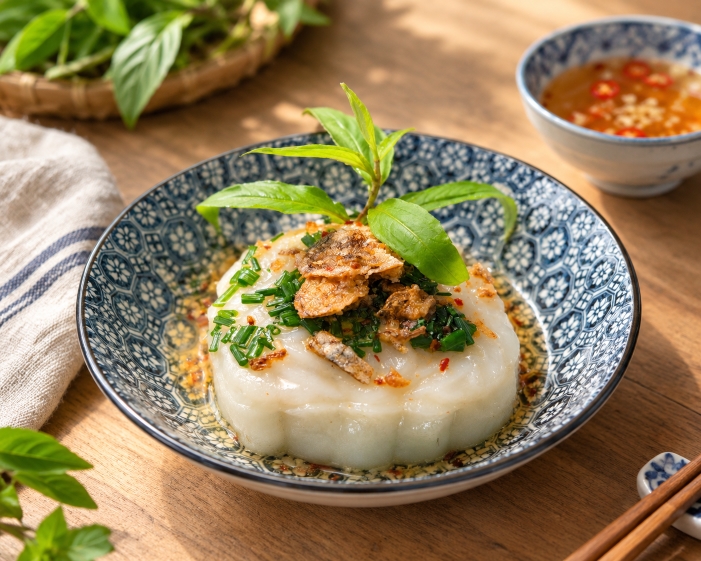
Soft, chewy bánh ít trần with a savoury shrimp, pork and mung bean filling, topped with scallion oil and crispy little bits. A recipe inspired by Diễm Nauy.
There are some Vietnamese dishes that don’t need much introduction.
You see them on the table and immediately know what they are.
Bánh ít trần is one of those dishes for me.
Soft, slightly chewy glutinous rice dough surrounds a savoury filling of mung beans, shrimp and pork. Once cooked, the little dumplings are topped with fragrant scallion oil and served with sweet-and-sour fish sauce.
They are simple, comforting and very Vietnamese.
This version follows Diễm Nauy’s recipe, which uses both dried shrimp and fresh shrimp together with ground pork and mung beans. Her recipe makes approximately 16 bánh ít trần.
What is bánh ít trần?
Bánh ít trần is a Vietnamese glutinous rice dumpling made without a banana-leaf wrapper.
The name trần means “bare” or “unwrapped”, which distinguishes it from versions of bánh ít that are wrapped in leaves.
The outside is made from glutinous rice flour, giving the dumplings their characteristic soft and pleasantly chewy texture. The inside can be savoury or sweet, depending on the recipe.
For a savoury bánh ít trần, mung bean is often combined with ingredients such as shrimp, pork and aromatics.
Diễm Nauy’s version is particularly delicious because the filling brings together mung bean, dried shrimp, fresh shrimp and pork rather than relying on just one main ingredient.
Bánh Ít Trần – Vietnamese Glutinous Rice Dumplings
Ingredients
Method
- Rinse the mung beans and cook them with the water and salt until tender.
- Once soft, mash them while they are still warm.
- The mung bean becomes the base of the filling, giving it a soft, slightly creamy texture that balances the shrimp and pork.
- Rinse the dried shrimp and prepare them according to the recipe.
- Sauté the shrimp with a little oil and minced garlic, then season with sugar and chicken bouillon powder.
- The dried shrimp add a deep savoury flavour that you don’t get from fresh shrimp alone.
- Heat the cooking oil and sauté the minced shallot until fragrant.
- Add the ground pork and cook until nearly done.
- Add the peeled shrimp and season with sugar, chicken bouillon powder and pepper.
- Cook until the shrimp are completely cooked.
- Combine the shrimp and pork mixture with the prepared mung bean filling.
- Let the filling cool enough to handle, then divide it into small portions and roll them into balls.
- This is the part that makes bánh ít trần so satisfying.
- Place the glutinous rice flour, salt and sugar in a bowl.
- Add the boiling water gradually and mix.
- Then add the room-temperature water and knead until you have a soft, smooth dough.
- If the dough feels too dry, add the remaining 10–30 ml water little by little.
- You want a dough that is soft and pliable but not sticky.
- Don’t add all the extra water at once. Flour can behave differently depending on the brand and even the humidity in your kitchen.
- Divide the dough into approximately 16 portions.
- Take one piece and roll it into a ball.
- Flatten it gently in the palm of your hand, keeping the centre slightly thicker than the edges.
- Place one ball of filling in the middle.
- Carefully bring the dough around the filling and pinch it closed.
- Roll gently between your palms until you have a smooth, round dumpling.
- Repeat until all the dough and filling are used.
- If you want the dumplings to have the form as mine, just use the forms for mooncake to make it.
- Bring a large pot of water to a gentle boil.
- Carefully place the bánh ít trần into the water.
- Cook until the dumplings are cooked through and have a soft, slightly translucent appearance.
- Remove them carefully and allow excess water to drain.
- At this point, the little dumplings should feel soft and chewy rather than hard or floury.
- A little mỡ hành makes a big difference.
- The fresh green scallions and fragrant oil complement the savoury filling and add just enough richness to the soft rice dumplings.
- Arrange the bánh ít trần on a plate, spoon over the scallion oil and finish with the toppings of your choice.
- Bánh ít trần is wonderful with a simple Vietnamese dipping sauce.
- Mix the boiling water and sugar until dissolved.
- Add the fish sauce and rice vinegar.
- Then add minced garlic and chilli.
- Taste and adjust the balance according to your preference. You want that familiar Vietnamese combination of salty, sweet, sour and a little spicy.
Don't make the dough too wet
A dough that is too soft can be difficult to shape and may break during cooking.Add the additional water gradually.Keep the filling fairly dry
A wet filling makes it much harder to seal the dumplings properly.Allow the filling to cool before wrapping.Seal the dough carefully
Make sure there are no gaps around the filling. A smooth, completely sealed dumpling is much less likely to split while cooking.Don't overcook them
The beauty of bánh ít trần is its soft, chewy texture. Cook just until the dough is completely cooked through. And bánh ít trần can't keep its nice form if it's overcooked. Don't overcook themTake time to let bánh ít trần cool down a bit to let it settle its form before taking it out, especially the ones that make with the mooncake forms.How to Serve Bánh Ít Trần
I like bánh ít trần best warm, with plenty of scallion oil and a small bowl of sweet-and-sour fish sauce alongside.
They work beautifully as a light meal, a snack or part of a Vietnamese-style family spread.
And like many Vietnamese homemade dishes, they are even better when everyone sits around the table and eats them while they’re still warm.
What does bánh ít trần mean?
Bánh ít refers to the traditional Vietnamese glutinous rice cake, while trần indicates that this version is made without the usual leaf wrapping.
Is bánh ít trần sweet or savoury?
It can be either. Savoury versions commonly contain fillings such as mung bean, shrimp and pork, while other versions can have sweet fillings.
Can I make bánh ít trần vegetarian?
Yes. The glutinous rice dough can be used with a vegetarian filling made from mung beans, mushrooms, tofu or other vegetables.
Can bánh ít trần be made ahead?
Yes. The dumplings can be prepared ahead and stored properly before reheating. For the best texture, I prefer serving them warm and freshly prepared.
A Little Taste of Home
There is something wonderfully comforting about making bánh ít trần from scratch.
It takes a little time to prepare the filling, knead the dough and shape each dumpling. But that is also part of the pleasure.
One by one, the little white dumplings come together.
Then comes the scallion oil, the savoury topping and that little bowl of fish sauce.
Nothing fancy.
Just good Vietnamese food made at home.
Recipe inspired by Diễm Nauy.